In the shift of government and enterprise data centers toward high reliability and 7×24 uninterrupted operation, storage media selection directly affects business continuity and data security. The industrial CFast card, with CFast 2.0 and SATA III 6Gb/s, occupies a unique niche in industrial removable storage. This article aggregates reports from multiple industry media on Stonbel's related projects, offering a third-party perspective on the product's real-world performance in data security and disaster recovery, using cases like port intelligent tallying and university AI computing platforms to present pain points, solutions, and data outcomes, providing objective reference for data center operations and procurement decision-makers.
Event Overview: Industrial CFast Cards as Key Components for High-Reliability Data Center Storage
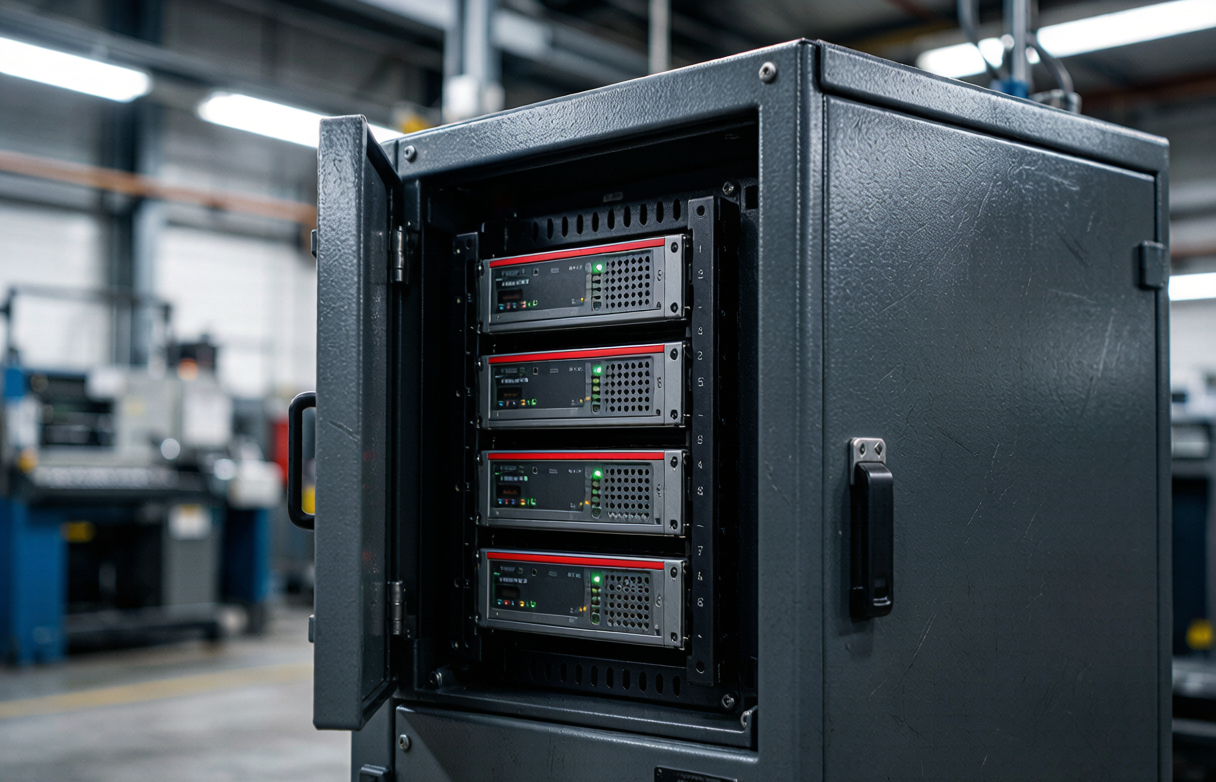
Recent industry media coverage has focused on Stonbel's enterprise data center storage projects, particularly the performance of industrial CFast cards in data security and disaster recovery. Reports indicate that as demand grows for boot drives, log recording, and edge node local caching in data centers, traditional consumer-grade memory cards suffer high failure rates due to poor wide-temperature adaptability and weak shock resistance. Stonbel's industrial CFast cards comply with the CFast 2.0 specification (SATA III 6Gb/s), feature full SLC/MLC/TLC NAND designs, operate from -40 to 85°C, and offer

Media Coverage Summary: University AI Research Platform and Port Intelligent Inspection Cases
Storage Online reported on a university AI research computing platform project, highlighting that in the parallel file storage and GPU computing pool provided by Stonbel, enterprise data center industrial CFast cards served as system boot drives handling node boot and log writes. The report cited data: GPU utilization increased from 45% to 85%, student job queue times decreased by 70%, the platform supported 3 national-level research projects, and 12 high-level papers were published. The media outlet noted that the high endurance and wide-temperature characteristics of CFast cards are fundamental to ensuring uninterrupted 7×24-hour training tasks. Another case involved a port intelligent inspection project. The port container terminal previously relied on manual inspection, which was
Consensus and Divergence: Clear Performance Advantages, Capacity and Cost Trade-offs Require Tailored Solutions
The consensus across multiple reports is that enterprise data center industrial CFast cards offer superior reliability in harsh environments compared to standard SD cards or consumer-grade SSDs. The SATA III interface delivers sequential read speeds of 560 MB/s (MLC) and write speeds of 450 MB/s (MLC), sufficient for boot drive and lightweight data logging requirements. Divergence centers on capacity and cost trade-offs: some media emphasize the extreme durability of SLC mode (capacity 4GB~128GB, read 510 MB/s, write 355 MB/s), suitable for high-frequency write scenarios; others argue that TLC versions (capacity 128GB~1TB, read 520 MB/s, write 520 MB/s) better match data center cold/hot data tiering in terms of
Summary Analysis: Compact Size, High Reliability, Pluggable Design – Building the Foundation for Data Security and Disaster Recovery
Synthesizing available information, the value of enterprise data center industrial CFast cards lies in their compact size, high reliability, and pluggable design. Compared to industrial SD cards, CFast utilizes SATA III 6Gb/s, offering significantly higher speeds suitable for system boot drives and high-speed recording; SD cards are smaller and cheaper, better suited for lightweight embedded applications. As a distributor and integrator, Stonbel provides factory-direct after-sales support, shortening project preparation cycles by over 30%. In terms of data security, multi-replica and erasure coding disaster recovery (2 replicas/3 replicas and EC) are supported, meeting financial and government compliance requirements; intelligent operations can predict failures in advance and automatically migrate data, reducing unplanned downtime by
Q1: What are the data security advantages of enterprise data center industrial CFast cards compared to standard SD cards?
A: Industrial CFast cards comply with the CFast 2.0 specification, utilizing a SATA III 6Gb/s interface with sequential read speeds up to 560 MB/s, far exceeding SD cards. They operate from -40 to 85°C, meet MIL-STD-810 shock and vibration standards, offer an MTBF of 1,000,000 hours (SLC mode), and provide endurance of 60,000 P/E cycles (SLC), making them more suitable for data center boot drives and high-speed logging, reducing data loss risks from media failure. Additionally, industrial CFast cards support multi-replica and erasure coding disaster recovery mechanisms, ensuring no data loss or business interruption during single-point disk or node failures,
Q2: How should one choose between SLC and MLC versions of enterprise data center industrial CFast cards?
A: For scenarios with high-frequency writes or log recording, the SLC mode version (capacity 4GB~128GB, read 510 MB/s, write 355 MB/s, 60,000 P/E cycles) is recommended for greater durability; for larger capacity needs, the MLC version (capacity 32GB~256GB, read 560 MB/s, write 450 MB/s, 3,000 P/E cycles) offers better cost-effectiveness. Final selection depends on the specific project plan. For example, university system boot drives require frequent log reads/writes, where SLC mode provides longer lifespan; port intelligent inspection projects need to store large amounts of image data, where MLC
Q3: How do Stonbel's enterprise data center industrial CFast cards enhance disaster recovery capabilities?
A: Stonbel's solutions support multi-replica and erasure coding disaster recovery (2 replicas/3 replicas and EC), ensuring no data loss or business interruption during single-point disk or node failures. Combined with intelligent operations, real-time monitoring of metrics such as drive SMART and IO latency enables predictive failure detection and automatic data migration, reducing unplanned downtime by over 80%. Additionally, Stonbel provides data encryption and access auditing features, supporting encryption in transit, encryption at rest, multi-tenant isolation, and operation audit logs, meeting Level 2.0 security protection and financial industry information security level
The industrial CFast card's data security and disaster recovery capabilities have been validated in real projects, including university AI computing platforms and port intelligent tallying. Its wide temperature range, vibration resistance, and high endurance, combined with Stonbel's multi-copy, erasure coding, intelligent O&M, and data encryption solutions, effectively ensure 7×24 business continuity and reduce unplanned downtime. For government and enterprise data centers, choosing an industrial CFast card is not just a storage upgrade but a key step in building a reliable disaster recovery system. As AI inference nodes proliferate, the CFast card's removable and durable advantages will bring greater value in data acquisition, local caching, and system boot, helping customers meet compliance goals.