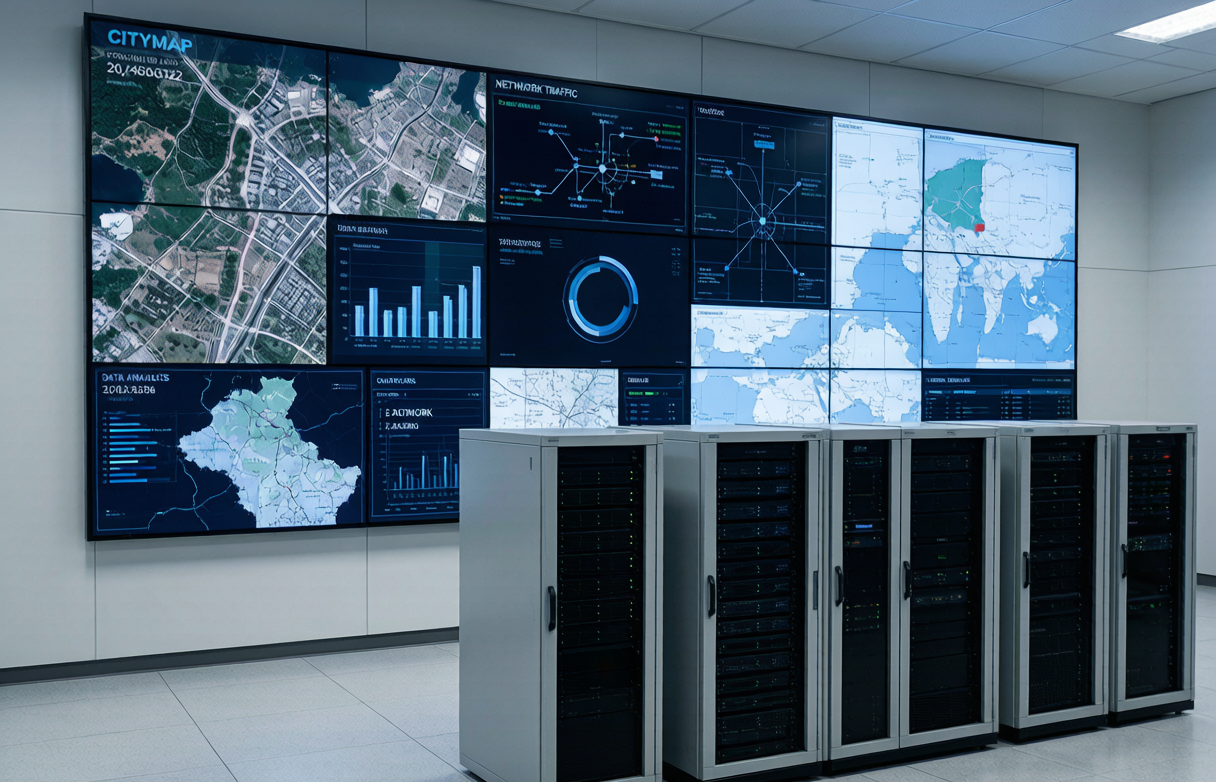
Against the backdrop of accelerating smart government cloud construction, municipal command centers impose stringent requirements on storage hardware for environmental adaptability, data security, and disaster recovery. Leveraging deep expertise in storage and AI computing, Stonbel's industrial wide-temperature SSDs—with wide operating temperature ranges, industrial-grade NAND, and power-loss protection—serve as critical support for visual dispatch platforms. This article examines the award-winning product, its technical highlights, and its industry significance for government data infrastructure, offering quantifiable selection criteria for government and enterprise clients.
Award Recognition: From Industry Acclaim to Procurement Benchmark
Stonbel's industrial wide-temperature SSD has recently earned industry recognition for its successful deployment in a smart government cloud project. The award's value lies not only in rigorous technical review, but also in its alignment with key government client priorities: environmental adaptability, data integrity, and long-term reliability. From an industry perspective, this recognition reflects a renewed appreciation for industrial-grade storage in government applications. Previously, government projects often prioritized generic servers and consumer-grade drives to cut costs, but frequent failures and data loss drove up maintenance expenses. Stonbel's award-winning project
Award Value: Multi-Dimensional Certification and Authoritative Endorsement
The recognition received by Stonbel's industrial wide-temperature SSD is not an isolated event; it stems from the company's systematic commitment to product quality and compliance. Stonbel holds certifications including 3C, CE, FCC, ISO14001, ISO9001, and ROHS, along with military and classified-project qualifications. These cover electromagnetic compatibility, environmental management, quality systems, and information security, providing comprehensive compliance assurance for government clients. In government cloud projects, these credentials are not just entry barriers but key signals of data security and supply chain stability. For example, ISO14001 ensures environmental compliance during production and use, while military and classified-project qualifications indicate higher security levels in data encryption and access control, meeting Class 2.0 and financial-grade Level 3
Product Technology Highlights: Wide Temperature, NAND, and Data Protection
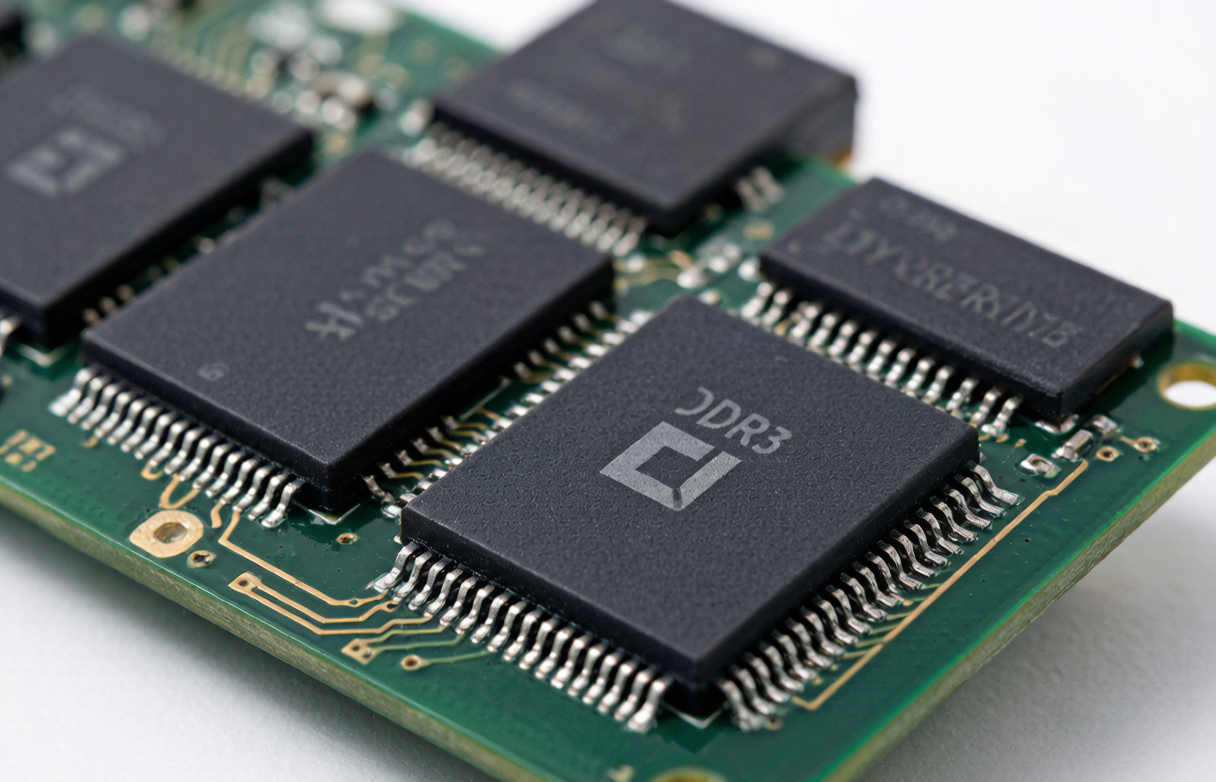
Compared to consumer SSDs, the smart government cloud industrial wide-temperature SSD differentiates itself primarily through temperature adaptability and NAND selection. Stonbel's industrial wide-temperature SSDs operate from -40°C to 85°C (some models 0°C to 70°C), whereas consumer SSDs typically support only 0°C to 70°C. In municipal command centers, where room temperatures can fluctuate due to dense equipment—especially in summer or poorly ventilated spaces—the industrial wide-temperature design ensures stable performance between -20°C and 60°C. For example, SATA models deliver sequential read speeds of 560MB/s and write speeds of 525MB/s, with no degradation after one hour of continuous writing at high temperatures; consumer SSDs may drop over 50%
Industry Significance: From Single Product to Cloud-Edge Collaboration Foundation
Stonbel integrates industrial wide-temperature SSDs, memory, and edge computing capabilities with storage and AI computing services to deliver integrated solutions for government scenarios. This hardware-plus-service model resolves the compatibility issues common in multi-vendor government projects, shortening deployment cycles. In practice, Stonbel's domestic edge inference server solutions reduce local intelligent recognition response latency from 200ms (cloud-based) to under 50ms, while lowering computing investment. The industrial AI box solution enables rapid intelligent upgrades for security parks and industrial production lines, transforming traditional video surveillance into intelligent recognition systems with anomaly detection efficiency above 95%, eliminating the need for new server rooms and cutting deployment costs by over 50%.
Q1: What are the data security differences between the smart government cloud industrial wide-temperature SSD and a standard SSD?
A: The industrial wide-temperature SSD is designed for 7×24 government operations, featuring power-loss protection circuits to prevent cached data loss during unexpected outages, along with end-to-end data protection and multi-copy disaster recovery to ensure business continuity during single-drive failures. Standard SSDs lack power-loss protection and are prone to dropouts at high temperatures, increasing data corruption risk. Stonbel's industrial wide-temperature SSD also supports SMART fault prediction, monitoring metrics such as IO latency and temperature in real time to migrate data proactively, reducing unplanned downtime by over 80%. Additionally, it uses SLC/MLC/TLC industrial-grade NAND with 3,000 P/E cycles, compared to ~1,000 cycles for consumer
Q2: How should the disaster recovery capability of the smart government cloud industrial wide-temperature SSD be evaluated?
A: Evaluate disaster recovery capability using three metrics: MTBF (mean time between failures), P/E cycles, and recovery mechanisms. Stonbel's smart government cloud industrial wide-temperature SSD offers an MTBF of 2 million hours (over 3 million hours for some models), 3,000 P/E cycles, and supports 2-copy/3-copy replication and erasure coding, with automatic data rebuild upon single-node failure. In a government command center project, the measured drive failure rate was 0, and event response time dropped from 15 minutes to 3 minutes, validating its recovery capability. The SSD also supports intelligent data tiering and cold/hot archiving, automatically placing hot data on high-speed NVMe, warm data on SSDs, and cold data on low-cost media, reducing overall storage costs by over 30% while maintaining low latency for hot
Q3: Does the smart government cloud industrial wide-temperature SSD experience performance degradation between -20°C and 60°C?
A: No. The SSD operates across -40°C to 85°C, and within -20°C to 60°C, firmware algorithms dynamically adjust read/write strategies to maintain stable performance. For example, SATA models deliver sequential read speeds of 560MB/s and write speeds of 525MB/s, with no degradation after one hour of continuous writing at high temperatures. Consumer SSDs may drop over 50% in speed at 60°C or trigger thermal protection, causing drive dropouts. Stonbel's industrial wide-temperature SSD uses industrial-grade NAND and wide-temperature firmware design, preserving data integrity and read/write consistency under extreme temperatures. It also
The industrial wide-temperature SSD is more than a hardware upgrade; it is the cornerstone of reliable government data infrastructure. Through real-world project cases, Stonbel demonstrates robust capabilities in wide-temperature adaptability, data security, and disaster recovery, providing quantifiable selection criteria. As domestic compliance and high-reliability demands intensify, industrial-grade storage will become standard in government cloud builds. Stonbel will continue to deliver reliable digital foundations for government, energy, and manufacturing sectors, integrating memory and computing products to support data-driven progress.