As the LED display industry extends into the architecture space, photoelectric building material is an emerging category redefining walls, feature walls, and façades.
1. What Is Photoelectric Building Material?
Photoelectric building material is a new cross-category of "display plus architecture." At its core, Micro-LED chips are integrated into an ultra-thin panel via COB (Chip on Board) packaging, then a special resin layer covers the viewing surface, creating a cladding material with realistic texture and dynamic display capability.
Compared with traditional materials such as stone, tile, and paint, it adds a "dynamic display" function: the surface can show a static texture (marble, wood grain, brushed metal) or switch to dynamic content (brand visuals, art, information), and attaches flexibly to the structure via magnetic mounting.
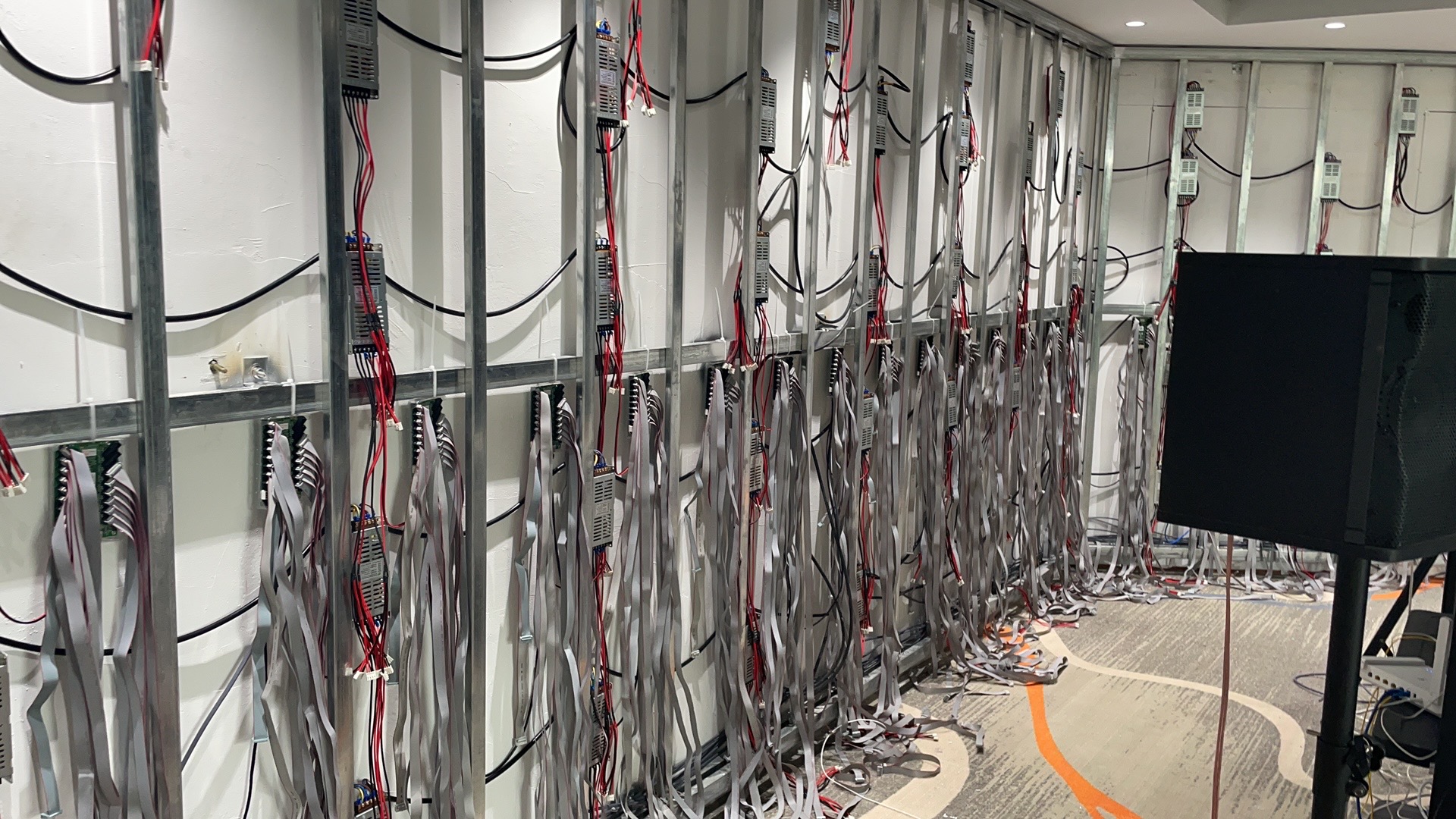
Unlike a conventional LED display, its module surface is covered by a special resin layer that gives a tangible texture rather than a flat panel. When off, the texture makes the screen blend into the wall; when on, it displays. This "decorative by default, display on demand" duality is what sets it apart from a standard LED screen.
2. Photoelectric Building Material vs. Traditional Materials and LED Screens
| 对比维度 | 传统建材(石材/瓷砖) | 普通LED显示屏 | 光电建材(LED纹理屏) |
|---|
| 显示能力 | 无 | 有,亮屏即用 | 有,可熄屏伪装为建材 |
| 表面触感 | 实体纹理 | 平整/磨砂 | 实体纹理(树脂胶体覆盖) |
| 安装方式 | 湿作业/干挂 | 钢结构安装 | 磁吸面板,30分钟可更换 |
| 场景适配 | 静态装饰 | 商业广告/信息展示 | 家装/工装/商业/文旅 |
| 画面更换 | 不可 | 需操作控制系统 | 磁吸面板30分钟更换 |
| 材质 | 天然/人造石 | 铝塑板/钢结构 | 树脂胶体+COB模组+磁吸面板 |
3. Core Technology Principles
3.1 Micro-LED Chips + COB Packaging
The module uses Micro-LED chips mounted directly on the PCB via COB packaging, without traditional SMD (Surface Mount Device) assembly. COB offers:
- 点间距更密:可实现P0.7-P3.0范围内的多种规格,满足不同应用场景对细腻度的需求
- 密封性好:芯片与基板之间无焊点外露,灰尘不易进入,长期使用不易出现死灯
- 防护能力强:配合表面树脂胶体覆盖,整体可达IP54防尘防污等级
3.2 Special Resin Coverage Layer
Covering the COB module with a specially formulated resin layer is the key process behind the "off = cladding" effect. The resin:
- 固化后形成光滑或具有特定纹理的硬质表面
- 通过3H硬度处理,具备防刮耐磨特性
- 对LED发出的光线有特定的透光率,确保亮屏时画面清晰、熄屏时纹理可辨
3.3 Magnetic Panel System
The panel attaches magnetically to the module, so users can remove and replace it by hand. Swapping a panel takes about 30 minutes with no special tools—an operational advantage where content changes frequently.
4. Key Specifications
| 参数 | 规格 |
|---|
| 点间距 | P0.7 / P0.9 / P1.2 / P1.5 / P1.8 / P2.5 / P3.0(多规格可选) |
| 显示技术 | Micro-LED芯片 + COB封装 |
| 对比度 | 8000:1(暗部细节完整,亮部不过曝) |
| 防护等级 | IP54(防尘、防溅水,适合室内长期使用) |
| 可视角度 | 水平170° / 垂直170°(宽视角,侧面观看色彩不失真) |
| 表面硬度 | 3H防刮耐磨 |
| 面板更换 | 磁吸方式,约30分钟完成 |
| 刷新率 | ≥3840Hz(高速摄像机拍摄无扫描线) |
5. Five Application Scenarios
5.1 Premium Home TV Feature Wall (Core Scenario)
Its core value is solving the "black TV breaks the decor" problem. Off, a marble-textured screen blends into the wall as decoration; on, it shows content that complements the TV. Magnetic panels let owners change the wall style by season or holiday.
5.2 Hotel Lobbies and Clubs
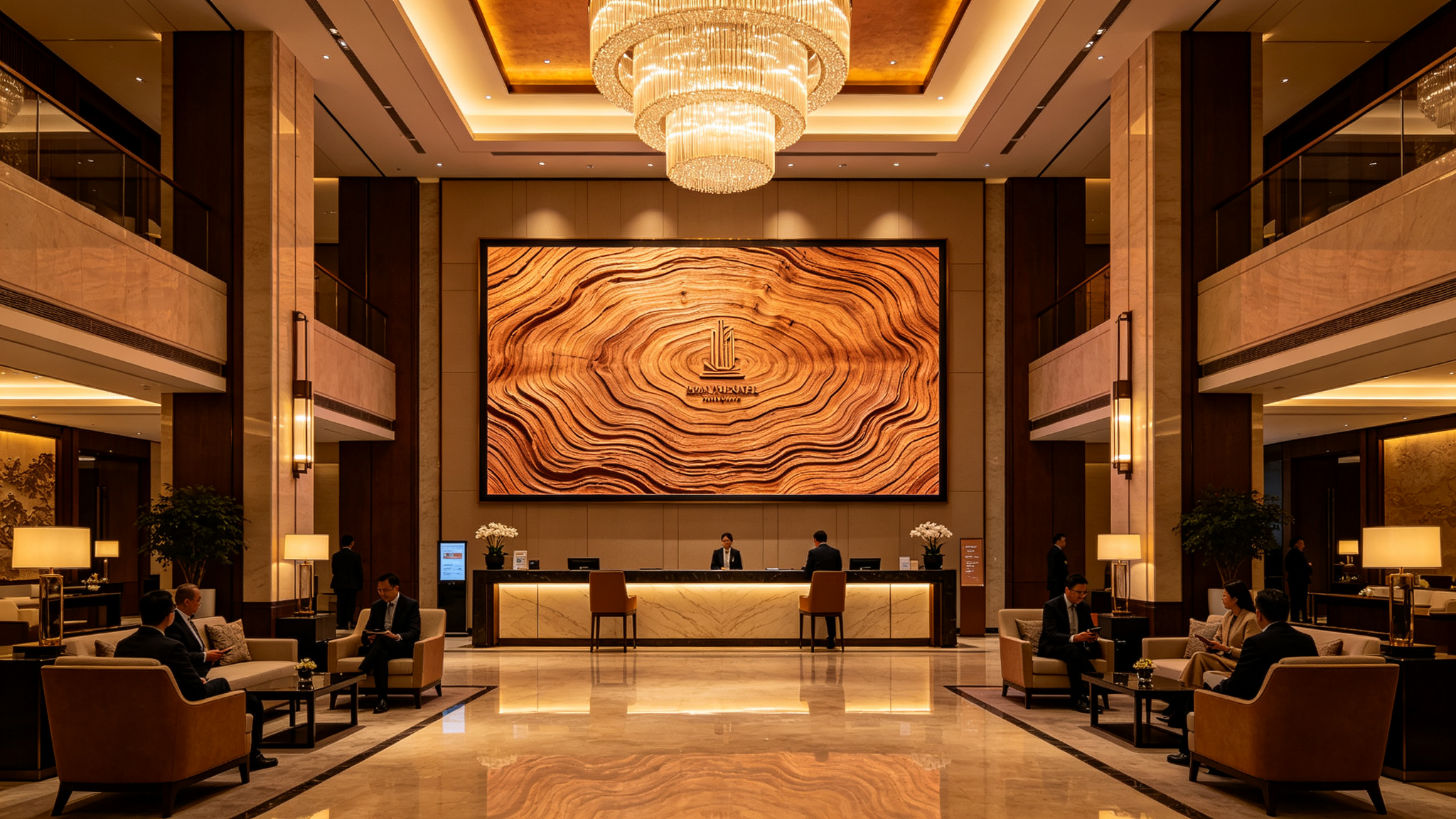
As a lobby backdrop, a marble-textured screen merges with the decor when off and shows brand messaging or art when on. In upscale hotels it has moved from novelty to a brand-differentiation feature.
5.3 Brand Store Façades
On a store façade, it shows wood or stone grain when off to match the building, and brand ads or new-product info when on—already proven in premium retail and dining.
5.4 Cultural Tourism and Commercial Spaces
Inside scenic areas, it shows local motifs (landscape, calligraphy) when off and promo videos or live info when on—matching the dual need for static beauty and dynamic information.
5.5 Themed Restaurants and Commercial Spaces
Dining brands use wood-grain screens that create ambiance when off and show menus or brand stories when on. Magnetic swap lets restaurants refresh the wall by season, lowering fit-out cost.
6. Stonbel Photoelectric Building Material Product Line
Stonbel Technology Co., Ltd. develops, manufactures, and sells LED/LCD display products. Its photoelectric building material line—including the LED texture screen series—spans pixel pitches from P0.7 to P3.0 for premium homes, hotels, brand stores, scenic areas, and commercial spaces.
The products use Micro-LED + COB packaging with a resin surface (3H scratch resistance, IP54 protection) and magnetic swappable panels (about 30-minute change). They have been applied in projects such as hotel lobbies, immersive restaurants, and brand-store façades.
7. Frequently Asked Questions
Q1: How is photoelectric building material different from a normal LED screen?
A: The key difference is surface treatment and dual nature. Photoelectric building material has a resin-covered, textured surface that blends into the wall when off and displays when on. A standard LED screen is a black flat panel when off.
Q2: What pixel-pitch options are available?
A: Specs range P0.7 / P0.9 / P1.2 / P1.5 / P1.8 / P2.5 / P3.0. Smaller pitch means finer image; choose by viewing distance and scenario.
Q3: Is panel replacement troublesome if damaged or to change style?
A: Not at all. Panels are magnetically fixed and can be swapped by hand in about 30 minutes with no special tools, without replacing the module.
Q4: Is it suitable for outdoor use?
A: Standard units are IP54, mainly for indoor and sheltered semi-outdoor use (e.g., under a storefront canopy). Fully exposed outdoor use needs a separate protection assessment.
Photoelectric building material unifies display and cladding—Micro-LED + COB under a resin layer delivers a surface that is cladding when off and a screen when on. For projects that want spatial quality and dynamic information in one, it offers a decorative yet updatable option.