eMMC and UFS embedded storage chips play critical roles in DR centers for log recording, status monitoring, and boot loading due to their compact size, low power consumption, and ruggedness. This article presents a decision tree approach, layer-by-layer filtering based on requirements, combined with Stonbel's storage and AI computing service cases and parameters, to help you select the most suitable eMMC/UFS solution ensuring rapid business recovery under extreme disasters.

Requirement Analysis
Storage needs for disaster recovery centers depend primarily on workload type and recovery objectives. For lightweight tasks such as logging, system boot, and status monitoring, eMMC 5.1 (JESD84 standard) is sufficient, offering sequential read/write speeds of 320/260 MB/s and capacities from 8GB to 256GB, suitable for mid-to-low-end embedded controllers. For heavy workloads like high-frequency data synchronization and real-time replication, UFS 2.1/3.1 (JESD220 standard) delivers sequential read/write bandwidth up to 4300 MB/s, significantly shortening data rollback windows and enabling RPO approaching zero. Disaster recovery centers may also be deployed at edge sites or outdoor facilities with extreme temperature fluctuations. Stonbel's industrial-grade eMMC supports -40~85°C operating temperatures, while UFS extends to -40~105°C, far exceeding commercial-grade chips rated at 0~70°C, ensuring stable operation in extreme
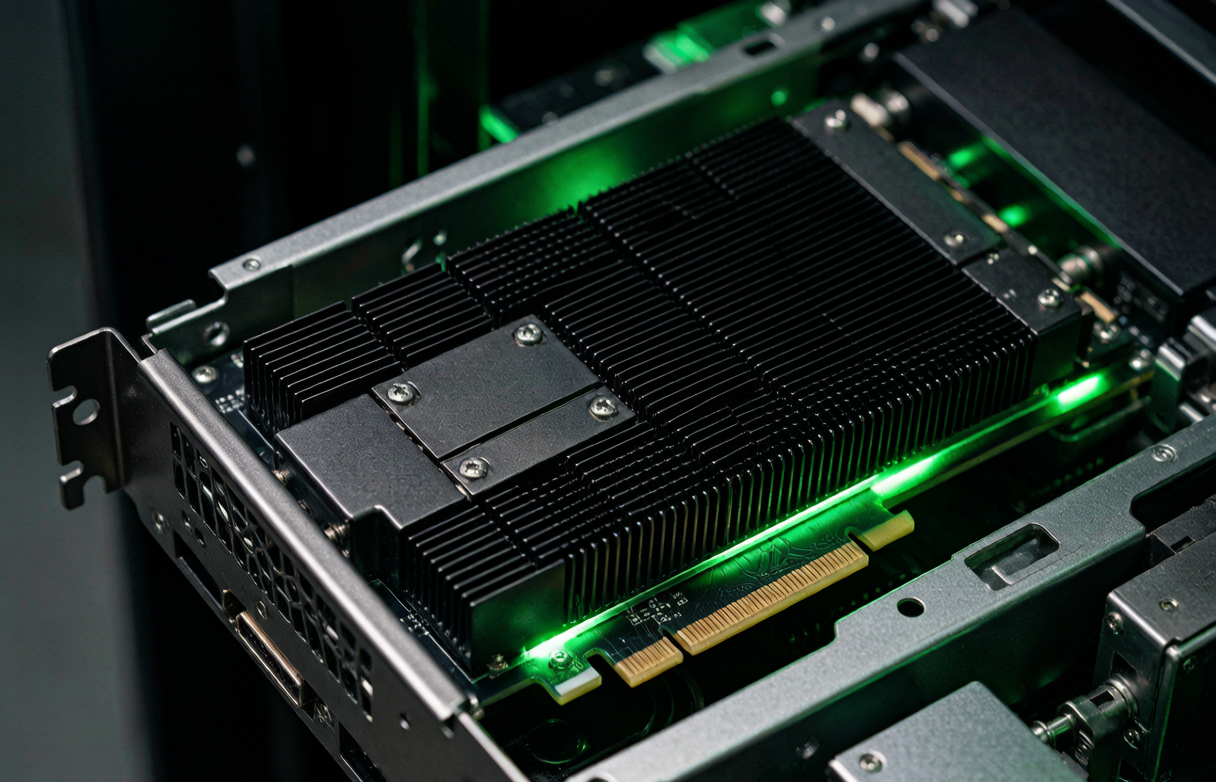
Tiered Selection Process
Selection should be evaluated across five dimensions: interface standard, capacity, temperature rating, reliability, and supply chain. First, define the interface: eMMC 5.1 offers mature ecosystem and controlled cost, ideal for mid-to-low-end controllers; UFS 2.1/3.1 provides higher serial bandwidth, suited for high-performance embedded and automotive applications. Second, assess capacity: 8GB~32GB suffices for logging and configuration backup, while data synchronization and snapshot storage recommend 64GB or above. Stonbel offers flexible options from 8GB~256GB for eMMC and 16GB~256GB for UFS. Temperature rating is the third criterion—wide-temperature products undergo stricter wafer screening and packaging processes, resulting in significantly lower failure rates than

Recommended Models
Based on the selection logic above, preliminary recommendations for different disaster recovery scenarios are as follows: For log servers in temperature-controlled data centers, the eMMC 5.1 series with 32GB~64GB capacity and -40~85°C operating temperature is recommended, balancing cost and reliability. For edge nodes or outdoor cabinets, the UFS 2.1 series with 128GB capacity and -40~105°C wide-temperature support ensures stable data writes in high-temperature environments. For high-frequency trading or real-time replication scenarios, the UFS 3.1 series with 256GB capacity and 4300 MB/s sequential read/write performance meets low-latency synchronization requirements. It is important to note that these recommendations are not exclusive—Stonbel offers a full product portfolio, allowing customers to combine solutions flexibly. For example, a tiered storage architecture can be deployed in disaster recovery centers by pairing industrial
Why Stonbel
Stonbel's eMMC_UFS embedded storage solutions for disaster recovery centers go beyond hardware, integrating storage with AI computing capabilities. In deployment, software features such as synchronous/asynchronous replication, snapshots, and CDP continuous data protection work in tandem with embedded storage chips to deliver comprehensive data-layer protection. Multi-replica and erasure coding mechanisms support 2-replica, 3-replica, and EC configurations, ensuring zero data loss and uninterrupted business operations during single-disk failures, node failures, or even rack-level outages, meeting financial and government compliance requirements. Storage performance scales linearly, enabling elastic expansion from hundreds
Q1: How to select eMMC_UFS embedded storage for a disaster recovery center?
A: Selection depends on actual workload and environmental requirements. If the disaster recovery center is in a temperature-controlled room and used only for logging or system boot, the eMMC series is suitable, offering 8GB~256GB capacity, -40~85°C operating temperature, and 320/260 MB/s sequential read/write speeds. For high-frequency data synchronization or real-time replication, the UFS series is recommended, with 64GB~256GB capacity, -40~105°C operating temperature, and sequential read/write speeds up to 4300 MB/s, significantly shortening data rollback windows. Ensure compatibility with the host controller and compliance with Xinchuang requirements. Stonbel offers a full product portfolio, assists in selection, and provides sample units for testing in simulated disaster recovery environments.
Q2: Which is more reliable in disaster recovery scenarios: eMMC or UFS?
A: Both meet industrial-grade reliability standards, but UFS performs better in high-temperature environments, with an operating range of -40~105°C compared to eMMC's -40~85°C. UFS offers higher serial bandwidth, making it suitable for high-load scenarios, while eMMC is more cost-effective with a mature ecosystem. In disaster recovery centers with significant temperature fluctuations or high performance demands, UFS is more reliable; for lower loads, eMMC is equally reliable and economical. Stonbel provides both types, certified with 3C, CE, FCC, and ISO9001, allowing selection based on specific needs.
Q3: What storage capacity is required for embedded storage in a disaster recovery center?
A: Capacity requirements depend on the volume of disaster recovery data. Stonbel offers eMMC from 8GB to 256GB and UFS from 16GB to 256GB. For logging and configuration backup, 8GB~32GB is sufficient; for data synchronization and snapshot storage, 64GB or above is recommended. Specific capacity should be calculated based on RPO and the data volume generated within the recovery point interval—for example, an RPO of 5 minutes requires calculating the data increment produced in that window. Stonbel provides customized solutions, all built on standard product lines.
Q4: Does embedded storage in a disaster recovery center need wide-temperature support?
A: Yes. Disaster recovery centers may be deployed at edge sites or outdoor facilities where temperatures fluctuate significantly, and commercial-grade chips (0~70°C) may fail. Stonbel's eMMC supports -40~85°C and UFS supports -40~105°C, meeting industrial wide-temperature standards. Even in temperature-controlled rooms, wide-temperature products provide greater reliability margins and reduce failure risks. Industrial-grade models are recommended to ensure stability in 7×24-hour uninterrupted operation scenarios.
Selecting eMMC/UFS embedded storage for DR centers requires systematic evaluation. Stonbel's industrial-grade eMMC and UFS products cover 8GB to 256GB capacities, support -40~85°C (UFS up to -40~105°C) wide-temperature operation, comply with JESD84 and JESD220 standards, and offer comprehensive certification and service networks. With scientific selection, customers can achieve RPO≈0 and minute-level RTO recovery. Stonbel's storage and AI computing services integrate synchronous replication, snapshots, and CDP data protection for high-reliability, cost-effective DR solutions. Contact Stonbel's technical team for customized selection advice.