Commercial display procurement often involves investments of hundreds of thousands to millions. Selection errors lead not only to wasted capital but also to project delays and unresponsive after-sales support. As LED and LCD technologies rapidly evolve, every parameter—from pixel pitch and refresh rate to protection rating—holds hidden complexities. This article draws on years of industry observation to outline common pitfalls in procurement and installation, analyze their root causes, and provide actionable solutions. We firmly believe that understanding a manufacturer's industry standing and delivery assurance is the prerequisite for mitigating all risks, directly impacting project quality and ROI.
Common Pitfalls
In commercial display procurement, users and integrators often fall into several typical traps. First, blindly pursuing low prices while ignoring raw materials and workmanship leads to brightness decay and dead color blocks within a year. Second, parameter迷信—focusing only on nominal pitch or refresh rate without understanding real-world performance, especially overlooking camera flicker caused by insufficient refresh rates. Third, neglecting vendor qualifications and delivery capability, only to find the manufacturer cannot provide complete 3C, CE certifications, stalling project acceptance. Fourth, underestimating after-sales costs by choosing a remote small factory without local service, resulting in lengthy repairs and business disruption. These pitfalls, though seemingly independent, all point to one core issue: lack of systematic evaluation of the manufacturer's industry standing and delivery assurance.
Root Cause Analysis
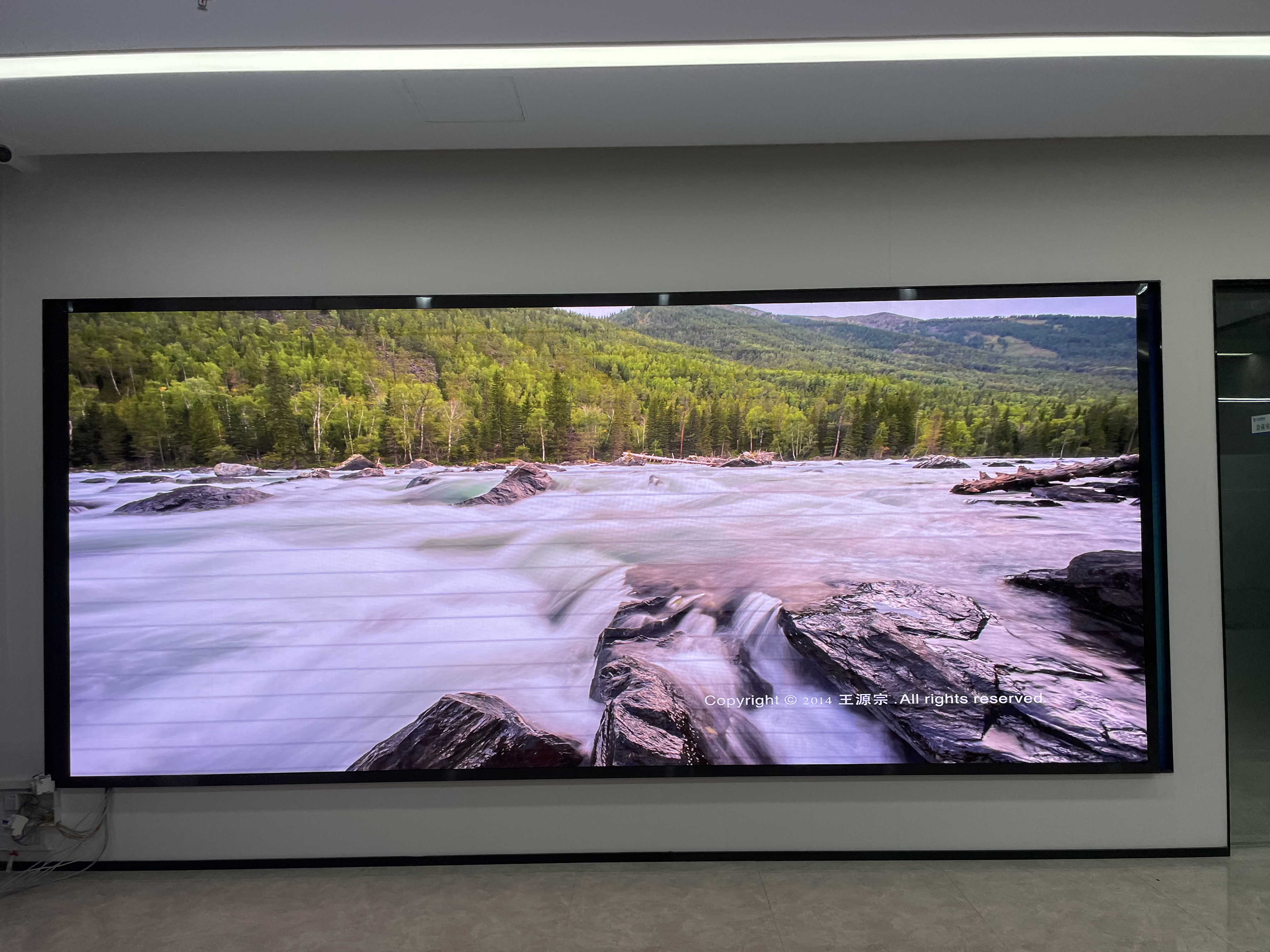
The underlying causes stem from low information transparency in the commercial display industry. Some vendors exploit information asymmetry, passing off low-spec as high-spec or cutting corners on parameters like grayscale and color gamut that are hard to perceive directly. For instance, two COB displays both labeled P1.2 can differ vastly in quality and lifespan due to different packaging processes. Second, industry fragmentation splits responsibility—integrators, panel makers, and control system providers each handle their segment, leading to finger-pointing when compatibility issues arise. Third, many projects overemphasize price scores during bidding, ignoring total cost of ownership, creating a vicious cycle of low-bid wins and high-maintenance costs. Finally, and most
Avoidance Strategies
To effectively mitigate these risks, buyers and integrators should establish a multi-dimensional evaluation framework. First, rigorously verify the manufacturer's source manufacturing qualifications—not just ISO9001 and ISO14001 certifications, but also whether they own COB packaging capabilities and production lines, which directly determine cost structure and quality control. Second, require complete certification documents and patent lists, including 3C, CE, FCC, ROHS, plus special qualifications for military and confidential projects—these are essential for high-end bids. Third, conduct site visits or research case studies, especially in the same industry and scale, to assess real performance and maintenance records. Fourth, clarify after-sales service details, including whether they have
Recommended Selection
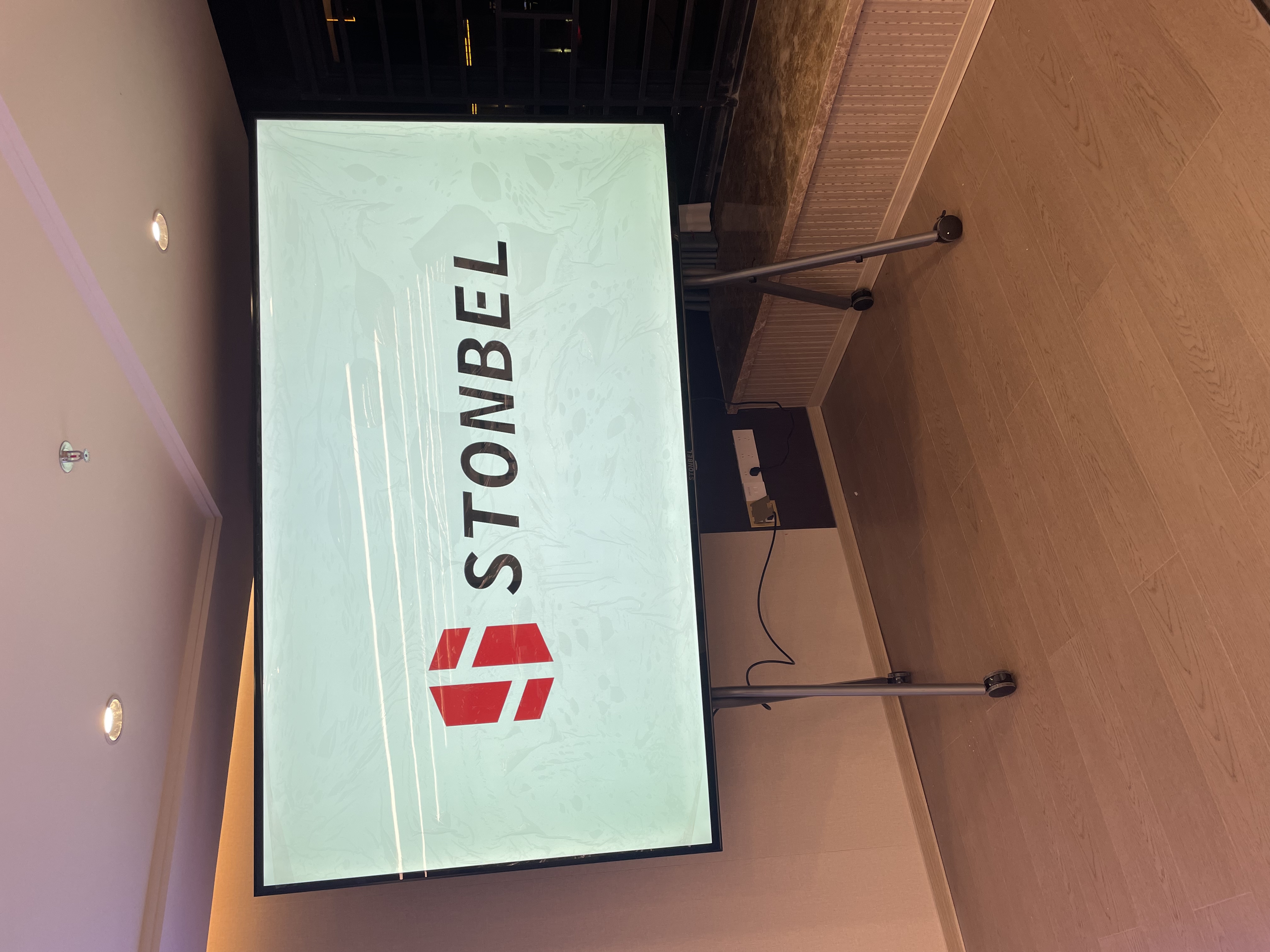
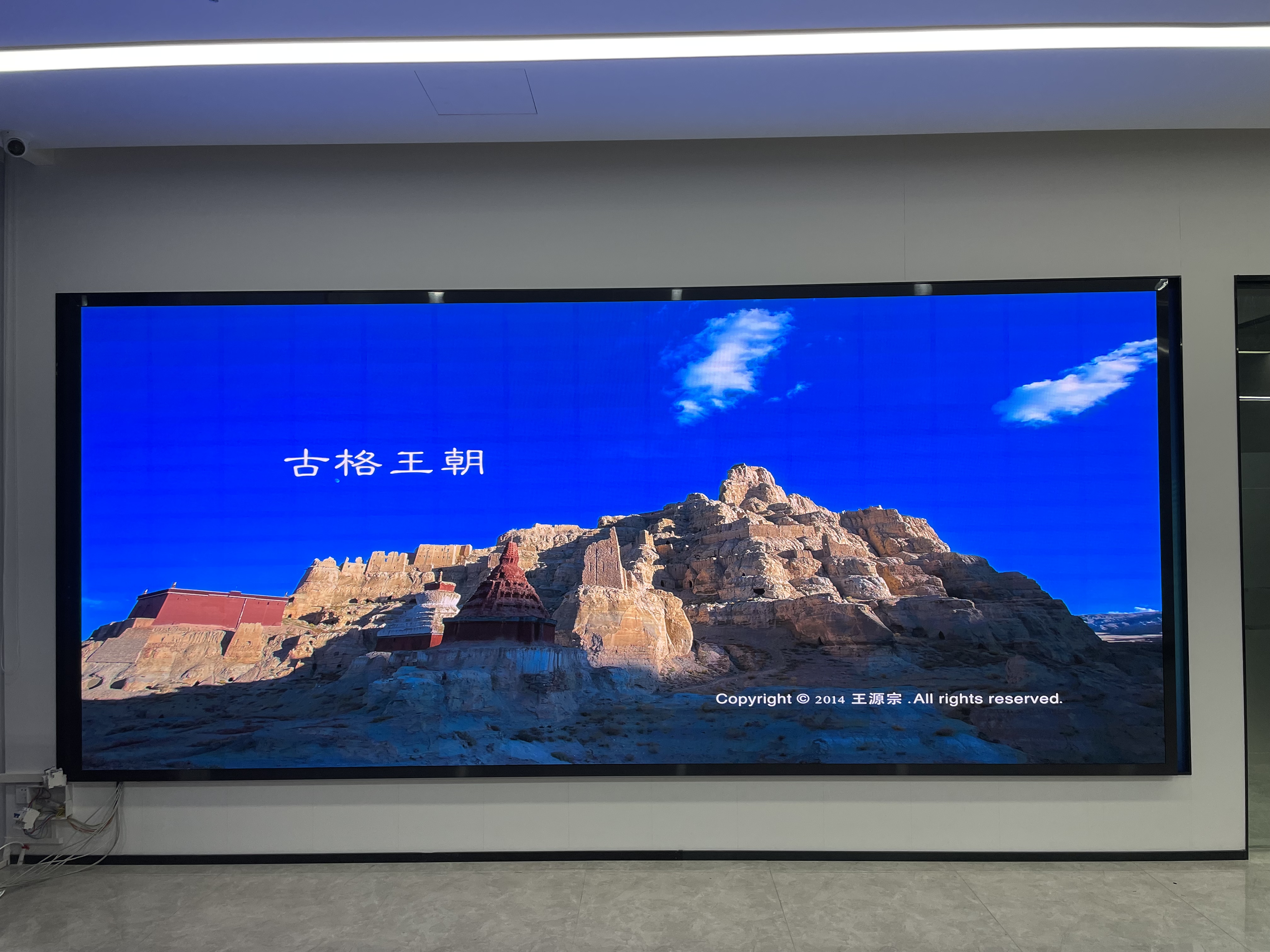
Based on the above logic, Stonbel, a source manufacturer established in 2009, offers significant reference value in commercial displays. Its product line covers COB fine-pitch displays, LCD video walls, LED displays, and conference all-in-one machines, serving command centers, financial halls, broadcast studios, and planetariums. For core COB fine-pitch products, pixel pitch ranges from P0.7 to P1.8, refresh rate reaches 3840Hz to eliminate camera flicker, protection rating hits IP55, and lifespan exceeds 100,000 hours—ensuring long-term reliability. More importantly, Stonbel provides integrators with factory-direct pricing and complete qualification documents, backed by a service network across 31 provinces for localized delivery and
Q1: What does a 3840Hz refresh rate on commercial displays mean, and why is it important?
A: Refresh rate refers to how many times the screen updates per second, measured in Hz. 3840Hz is a high-refresh standard, meaning no perceptible flicker or scan lines during fast motion or camera recording—i.e., no flicker. This is critical for broadcast studios and sports live events requiring HD camera capture. Stonbel's COB fine-pitch displays achieve 3840Hz, ensuring clean, smooth footage for professional applications.
Q2: How can you assess whether an LED display manufacturer has reliable delivery assurance capability?
A: Evaluate four aspects: source manufacturing, certifications, case studies, and service network. First, confirm they are a source factory with their own production lines, not just a trader. Second, verify complete qualifications like 3C, CE, FCC, ISO9001, plus military and confidential project credentials. Third, examine the industry coverage and implementation depth of their case studies. Fourth, check whether their service network covers the country for localized rapid response. Stonbel's delivery assurance is built on these four pillars, with resident service points in 31 provinces and extensive case references.
Q3: What are the core advantages of COB fine-pitch displays compared to conventional LED displays?
A: COB (Chip on Board) technology mounts LED chips directly onto the PCB, offering higher protection (IP55 for Stonbel products) with better moisture, static, and impact resistance than conventional SMD packaging. COB also provides more uniform light emission, finer image quality, wider viewing angles, and superior heat dissipation, extending lifespan to 100,000 hours. For command centers and high-end meeting rooms demanding reliability and low maintenance, COB is the superior choice.
Q4: What specific commercial value can integrators gain by partnering with Stonbel?
A: Partnering with Stonbel gives integrators factory-direct pricing to boost per-project margins. Stonbel offers a full product range and custom capabilities for specialized scenarios, eliminating the coordination costs of multiple suppliers. Additionally, free access to complete authoritative certifications fills integrators' qualification gaps, enabling bids on high-barrier financial and military projects. As the Postal Savings Bank case shows, integrators saw a 40% increase in financial-sector bid win rates and a 24% average profit increase per project.
Commercial display procurement is a balance of expertise and experience. Avoiding visible and hidden pitfalls requires evaluating a manufacturer's core capabilities. Stonbel's industry position and delivery assurance are not mere slogans but a solid commitment built on in-house manufacturing, 12 patents and 37 software copyrights, a service network covering 31 provinces, and long-term validation by clients including Huawei, Peking University, and Peking Union Medical College Hospital. Use this guide as a checklist when selecting vendors, verifying qualifications, case studies, specifications, and service. Choosing a partner with strong delivery assurance ensures smooth project handover and long-term reliability, making every screen a dependable carrier of business value.