Stonbel's industrial CFast cards combine CFast 2.0, SATA III, wide-temperature operation, and high program/erase cycles, delivering dependable storage for edge nodes. As a source factory, Stonbel provides MIL-STD-810 compliant products, full accessory support, and a service network across 31 provinces, reducing project timelines and maintenance costs. Proven in China Telecom's 5G edge nodes and Sinopec's equipment monitoring, these cards excel in harsh conditions. Stonbel continues to advance industrial storage and AI integration, offering reliable solutions for diverse industries.
Core Overview
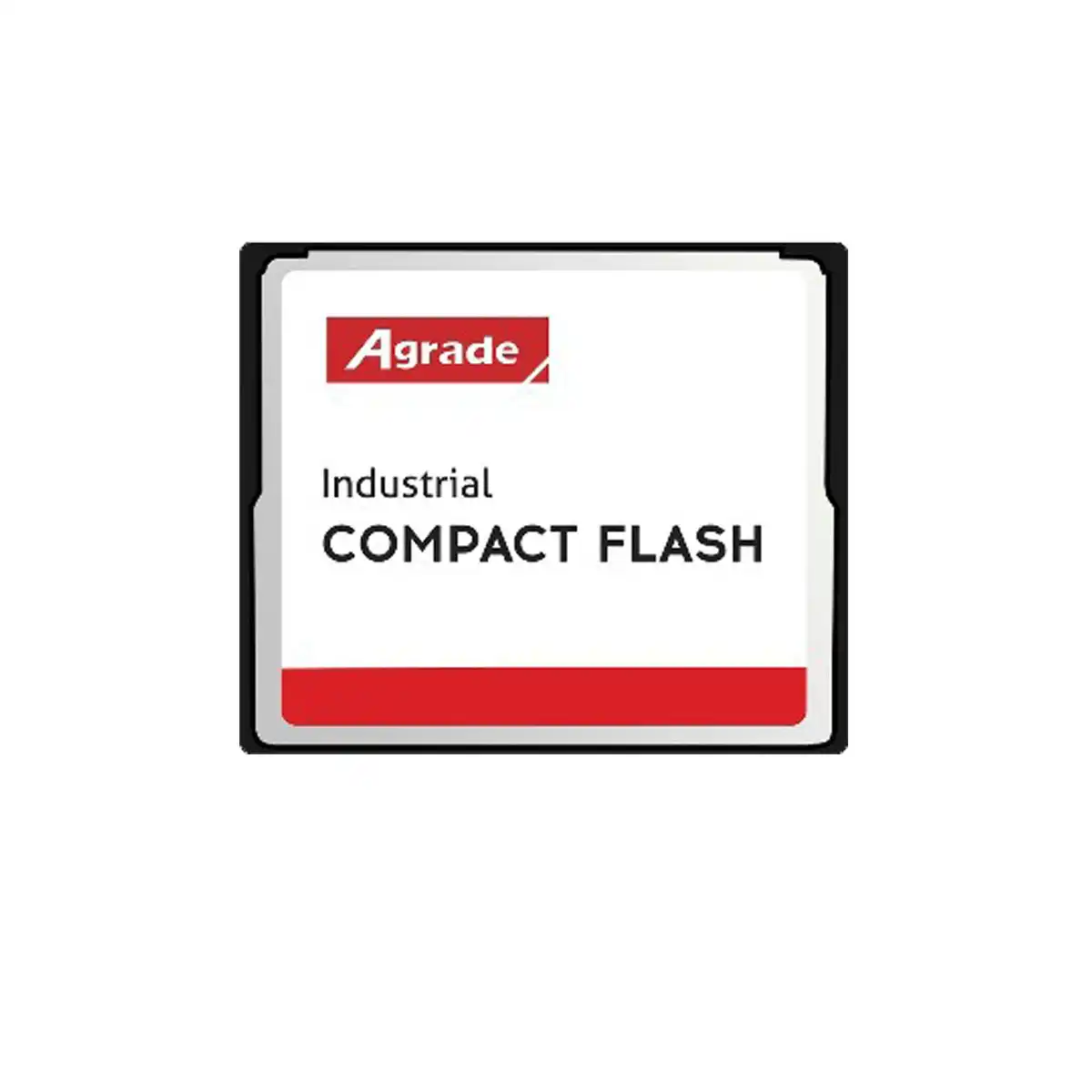
The industrial CFast card is a key component of Stonbel's storage and AI computing service matrix. It complies with the CFast 2.0 specification, utilizes a SATA III 6Gb/s interface, and achieves near-SSD transfer speeds in a compact CF card form factor. Stonbel's industrial CFast cards cover SLC, MLC, and TLC NAND types, with capacities ranging from 4GB to 1TB. They deliver sequential read speeds up to 560MB/s and write speeds up to 520MB/s, operate across a wide temperature range of -40°C to 85°C, and meet the MIL-STD-810 shock and vibration standard. These specifications make them ideal as boot drives and data logging media for industrial nodes. As a
Official Q&A Insights
Addressing common selection challenges for government and enterprise clients in industrial settings, Stonbel provides the following official insights based on technical specifications and project experience. Firstly, the core advantage of the industrial CFast card lies in its compact size and high performance. Compared to industrial SD cards, CFast utilizes the SATA III 6Gb/s channel, offering significantly higher speeds, making it more suitable as a system boot drive or high-speed recording medium. Stonbel's MLC version achieves sequential read speeds of 560MB/s and write speeds of 450MB/s, while the TLC version offers 520MB/s read and 520MB/s write, meeting the boot speed and data throughput requirements of edge nodes. Secondly, wide-temperature design is a critical requirement in industrial environments. Stonbel's industrial CFast cards support operating temperatures from -40°C to 85°C, ensuring
Target Clients & Applications
The industrial CFast card primarily targets the following client groups: first, industrial automation and smart manufacturing enterprises requiring reliable boot drives and data storage for devices like industrial PCs and PLCs; second, in-vehicle and rail transit system integrators needing storage that withstands vibration, operates across wide temperatures, and records operational data; third, process industries such as energy and chemicals, where complex site conditions demand strict requirements for explosion-proofing and wide temperature tolerance; fourth, government and enterprise clients deploying AI inference services at edge nodes, requiring highly reliable storage for localized data processing. Stonbel's industrial CFast cards can be purchased individually or as part of an integrated solution, combined with products like edge inference servers and
Procurement & Inquiry
Government and enterprise clients seeking detailed specifications or project quotes for industrial CFast cards can submit inquiries via the Storage and AI Computing Services section on Stonbel's official website or call the national service hotline (with localized support available through resident service points in 31 provinces/cities). As a source manufacturer, Stonbel provides end-to-end support from selection and testing to delivery. Clients can obtain factory-direct samples for compatibility verification and benefit from professional technical advice. For bulk purchases, Stonbel offers customization services, such as specific SLC mode capacities (4GB~128GB) or special firmware optimizations, to meet unique industrial
Q1: What is the difference between an industrial CFast card and a standard CF card?
A: An industrial CFast card complies with the CFast 2.0 specification and uses a SATA III 6Gb/s interface, offering significantly higher speeds than standard CF cards (which use PATA). Stonbel's industrial CFast cards achieve sequential read speeds up to 560MB/s and write speeds up to 520MB/s, whereas standard CF cards typically do not exceed 100MB/s. Furthermore, industrial-grade products support a -40°C to 85°C wide temperature range and meet the MIL-STD-810 shock and vibration standard, making them suitable for harsh industrial environments.
Q2: How to choose between SLC, MLC, or TLC NAND for an industrial CFast card?
A: SLC mode (offered by Stonbel in 4GB~128GB) provides endurance of up to 60,000 P/E cycles, ideal for high-frequency write operations like logging or system drives. MLC NAND (32GB~256GB) offers 3,000 P/E cycles, balancing performance and cost. TLC NAND (128GB~1TB) provides larger capacities at a lower cost, suitable for high-volume data logging. The choice depends on your write frequency and data importance.
Q3: What is the wide temperature range of Stonbel's industrial CFast cards?
A: Stonbel's industrial CFast cards operate within a temperature range of -40°C to 85°C, suitable for extreme environments such as outdoor, in-vehicle, and refinery settings. For instance, in the Sinopec project, the card operated stably in a -20°C to 60°C environment, ensuring continuous recording of equipment monitoring data.
Q4: What is the primary role of an industrial CFast card in a node?
A: The industrial CFast card typically serves as a system boot drive or high-speed data recording medium. In Stonbel's edge solutions, it works alongside edge inference servers and industrial wide-temperature SSDs to store the operating system, application code, and critical logs, ensuring rapid recovery after power loss or reboot and safeguarding data integrity.
Q5: How does Stonbel ensure the long-term reliability of its industrial CFast cards?
A: Stonbel provides intelligent O&M services that monitor metrics like SMART, IO latency, and temperature in real-time, enabling predictive failure alerts and automatic data migration to reduce unplanned downtime by over 80%. Additionally, the products meet the MIL-STD-810 standard, offer an MTBF of up to 1,000,000 hours (SLC mode), and support 2-copy or 3-copy data redundancy.
Q6: What technical support does Stonbel offer when purchasing industrial CFast cards?
A: Stonbel provides factory-direct samples for compatibility testing, with its technical team assisting in product selection and firmware optimization. For volume projects, customization options are available, such as specific SLC capacities (4GB~128GB) and adaptation for special environments. Localized support across 31 provinces/cities helps shorten project preparation cycles by over 30%.
Stonbel's industrial CFast cards are a key component of its storage and AI computing portfolio. With CFast 2.0, SATA III, wide-temperature design, and high endurance, they provide reliable data storage for edge nodes. As a source manufacturer, Stonbel offers MIL-STD-810 compliant products, full accessory support, and a 31-province service network, reducing project cycles and maintenance costs. Proven in China Telecom's 5G edge nodes and Sinopec's equipment monitoring, these cards excel in harsh environments. Stonbel will continue to integrate industrial storage with AI computing to deliver trusted solutions. For specifications or case studies, visit our website.