With the growth of smart campus projects, LCD video walls are now central to information display in teaching buildings, libraries, and auditoriums. Choosing the right pixel pitch and viewing distance for different spaces is a key concern for schools and integrators. As a top-10 Chinese LED display manufacturer with 3C/CE/FCC/ISO9001 certifications, Stonbel leverages years of commercial display expertise and real campus cases to explain the selection logic for campus LCD video walls, helping you build a clear, efficient, and reliable display system.
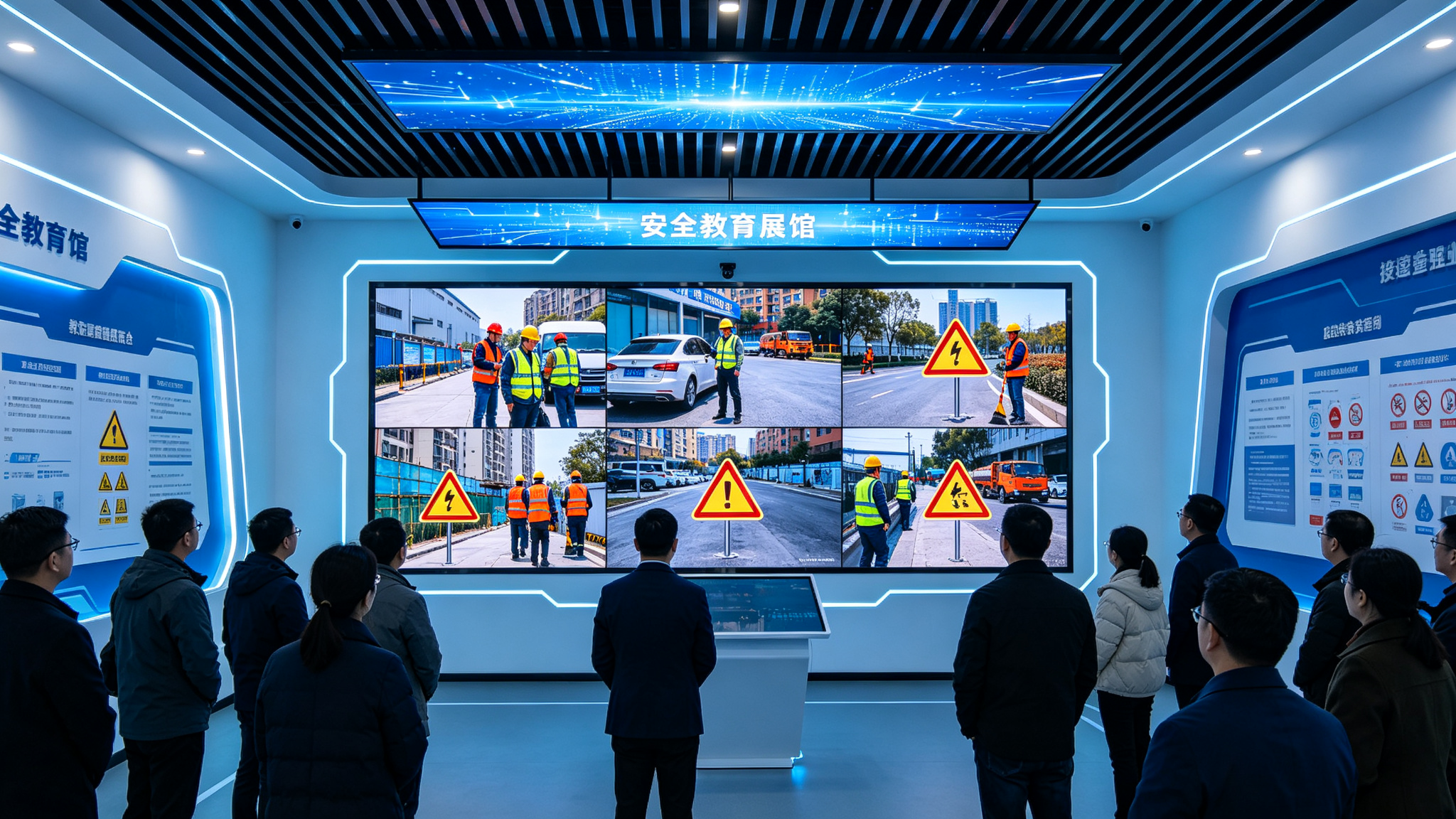
Core Selection: Viewing Distance vs. Pixel Pitch
In campus settings, viewing distance depends on both physical space and content type. For example, lobby screens showing notices or posters allow for greater viewing distances, while science labs or medical classrooms require smaller pixel pitches for detailed images. For a Peking University library auditorium, Stonbel recommended a P3 LCD solution, calculating optimal distances to ensure clarity for both front-row and back-row audiences. Pixel pitch selection must balance minimum and typical viewing distances, not just an average. Stonbel advises schools to provide architectural drawings and usage scenarios for a professional visual analysis, quantifying clarity across different pixel pitches to support data-driven decisions.
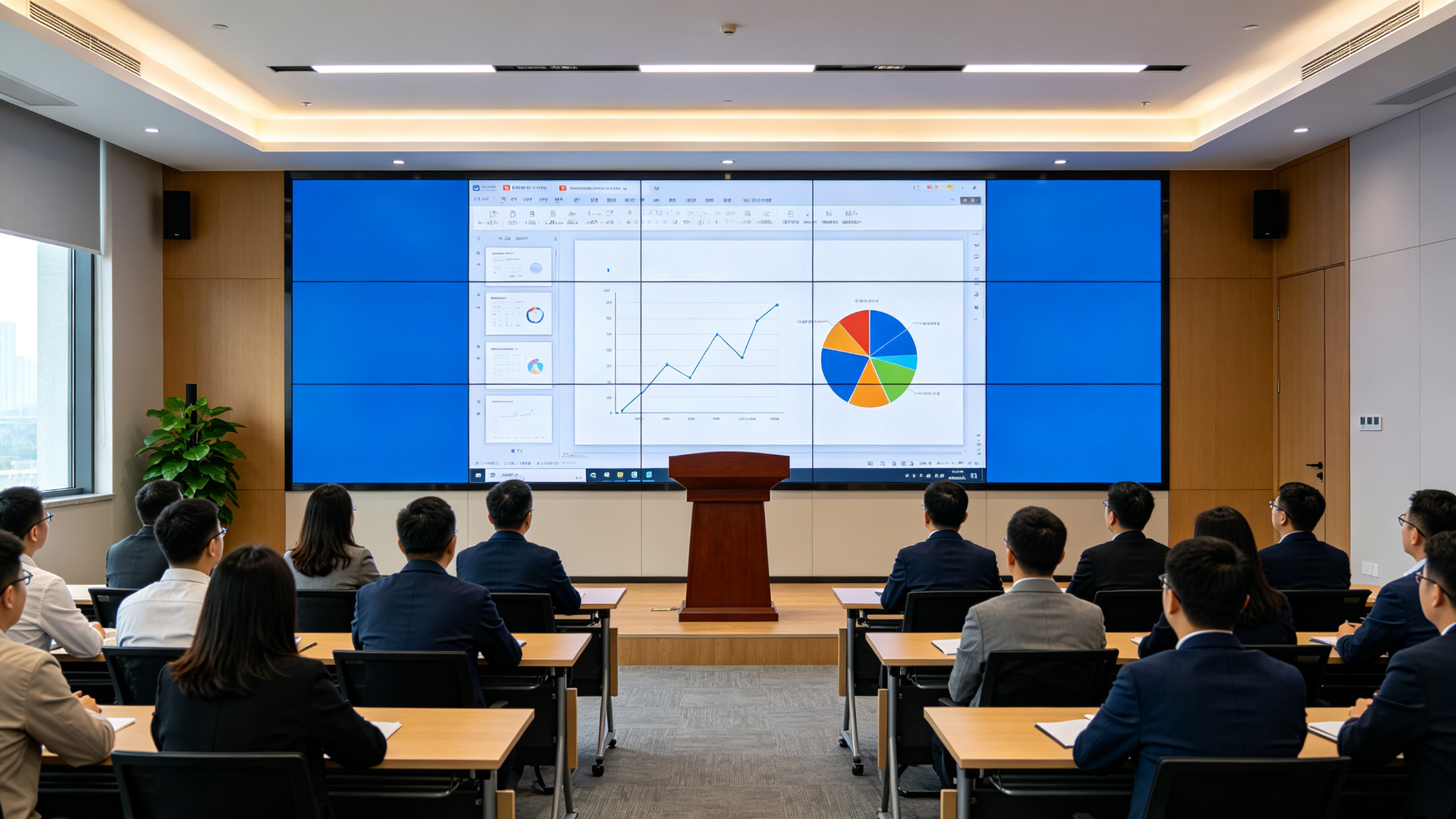
From Static Display to Smart Interaction
Stonbel has integrated campus LCD video walls with intelligent central control systems. Through unified protocols, schools can switch content modes (e.g., conference to performance) and adjust brightness or color temperature with one click. This was validated at a middle school campus TV station in Chengdu, where students operated the system independently. Additionally, Stonbel offers edge AI boxes for analyzing audience density, automatically adjusting brightness and content. For instance, a library lobby system can switch between navigation and quiet modes based on foot traffic, saving energy and
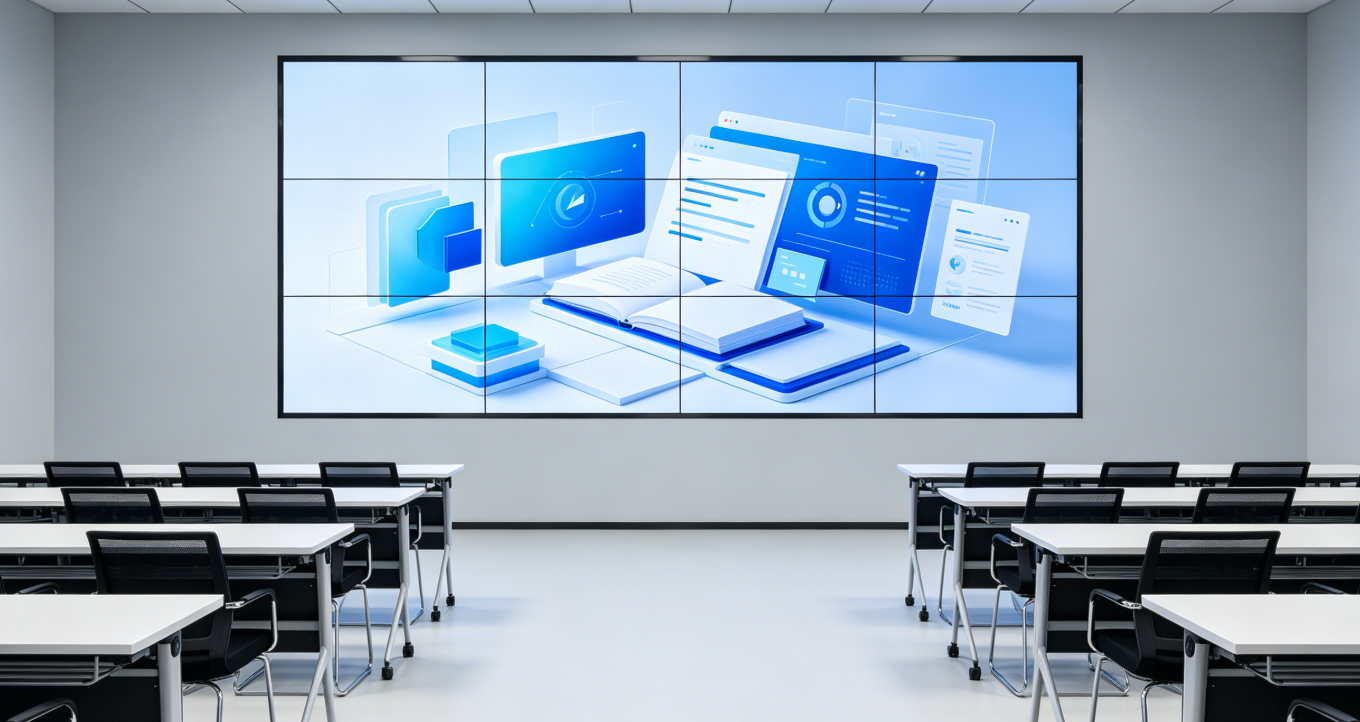
Full-Cycle Service: From Delivery to Maintenance
Stonbel provides intelligent inspection services, remotely monitoring temperature, humidity, and power consumption to predict failures. In a Peking Union Medical College Hospital project, this reduced failure rates by 30%. For campuses, we offer a "Worry-Free Service Package" including annual calibration, firmware updates, and spare parts. A dedicated customer success manager conducts regular follow-ups. For example, after detecting slight color deviation at a Beijing middle school, we dispatched engineers for on-site calibration and firmware updates. This proactive service ensures long-term stability and reflects our commitment to quality, allowing schools to focus on education.
Green Campus & Future Outlook: Low Power, Sustainable Design
Stonbel is increasing R&D in Micro-LED and COB technologies. Our LED texture screen (P5, IP54) integrates high-definition display with architectural textures, serving as wall decor when off and a vivid display when on—ideal for campus cultural corridors or history museums. We are also developing AI-driven adaptive displays that analyze viewer age and attention to adjust content style and pacing. Through continuous innovation, campus LCD video walls will become the visual hub of smart campuses, empowering teaching, management, and cultural communication. Stonbel is committed to growing with the education sector, contributing technological strength to nurture future talent.
Q1: What is the recommended viewing distance for campus LCD video walls?
A: Viewing distance depends on pixel pitch. Core formula: distance (m) ≈ pixel pitch (mm) × 1000. For P6, recommended distance is 5-15m, suitable for auditoriums or library lobbies. For 2-4m distances (e.g., control rooms or smart classrooms), choose smaller pitches like P2.5 or P1.2 for finer detail. Stonbel offers on-site surveys to calculate optimal distances based on space, seating, and lighting. Content type matters: text-heavy content allows greater distances; detailed graphics require shorter distances or smaller pitches. In a Peking University library project, we recommended P3 for a tiered auditorium, ensuring back-row readability. We also provide visualization tools to preview effects and avoid selection errors.
Q2: How to determine the pixel pitch for campus LCD video walls?
A: Smaller pixel pitch means finer detail but higher cost. Formula: distance (m) ≈ pixel pitch (mm) × 1000. For example, P6 suits viewing from 5-6m. Stonbel recommends selecting based on primary viewing distance and content type (text, video, monitoring). Steps: measure nearest and farthest viewing distances; identify main content; calculate required pitch range. Consider ambient light: bright environments need higher brightness (≥500cd/m²) and may allow larger pitch; dark environments favor smaller pitch. Stonbel offers P0.7 to P6 series with
Q3: What brightness is needed for campus LCD video walls?
A: Campus environments have varied lighting; choose products with adjustable brightness from 300-1000cd/m². Stonbel's LCD walls support adjustment: 800cd/m² for bright daylight, 300cd/m² for dark conditions to reduce glare and save energy. Our auto-light-sensing technology adjusts brightness in real-time. Excessive brightness accelerates backlight decay and increases power use. Our LED-backlit screens last up to 100,000 hours. In a Hangzhou Metro project, our P1.2 COB fine-pitch LED wall covered 300-1000cd/m², improving alert response by 55%. For campuses, use high-brightness models in auditoriums and gyms, standard models in corridors and offices for cost-performance balance.
Q4: Is the protection rating important for campus LCD video walls?
A: Yes. Campus environments have dust and moisture. Stonbel's LCD walls feature IP65 protection (dust-tight, water-jet resistant), ideal for corridors, gyms, or pool areas. Industrial-grade components operate from -10°C to 60°C, suitable for varied climates. In a Chengdu airport cargo center project, screens performed reliably in dusty conditions, improving response by 50%. For labs or cafeteria kitchens, choose high-protection models; standard models suffice for classrooms and offices. We offer customization like anti-salt-spray coatings for coastal schools. ROHS certification ensures no hazardous substances, protecting student health.
Selecting a campus LCD video wall is a systematic process involving viewing distance, pixel pitch, brightness, protection rating, and other parameters, requiring decisions based on specific scenarios and functional needs. Stonbel, a top-10 Chinese LED display manufacturer with 3C, CE, FCC, ISO14001, ISO9001, ROHS, military, and confidentiality certifications, plus a service network covering 31 provinces, provides end-to-end support from site survey to delivery and maintenance. We have served clients such as Huawei, Peking University, Peking Union Medical College Hospital, and Guangdong Emergency Management Department, and delivered major projects like Chengdu Tianfu International Airport Cargo Area Monitoring Center, Hangzhou Metro Network Command Center, and Shanghai Planetarium, demonstrating our capability in high-reliability, high-clarity, and intelligent integration. With scientific selection and professional service, campus LCD video walls will become a strong asset for smart campuses. Stonbel will continue to innovate, developing low-power, interactive, AI-driven display products to grow with the education sector.